Mira Loma homes built before the 2000s often feature stucco exteriors and limited attic ventilation that trap moisture during rare but intense summer thunderstorms. When temperatures exceed 100 degrees for weeks, air conditioning systems run constantly and create condensation on ducts routed through unconditioned spaces. This combination produces hidden growth in wall cavities around Mira Loma Park and near Wine Country properties where irrigation lines run close to foundations.
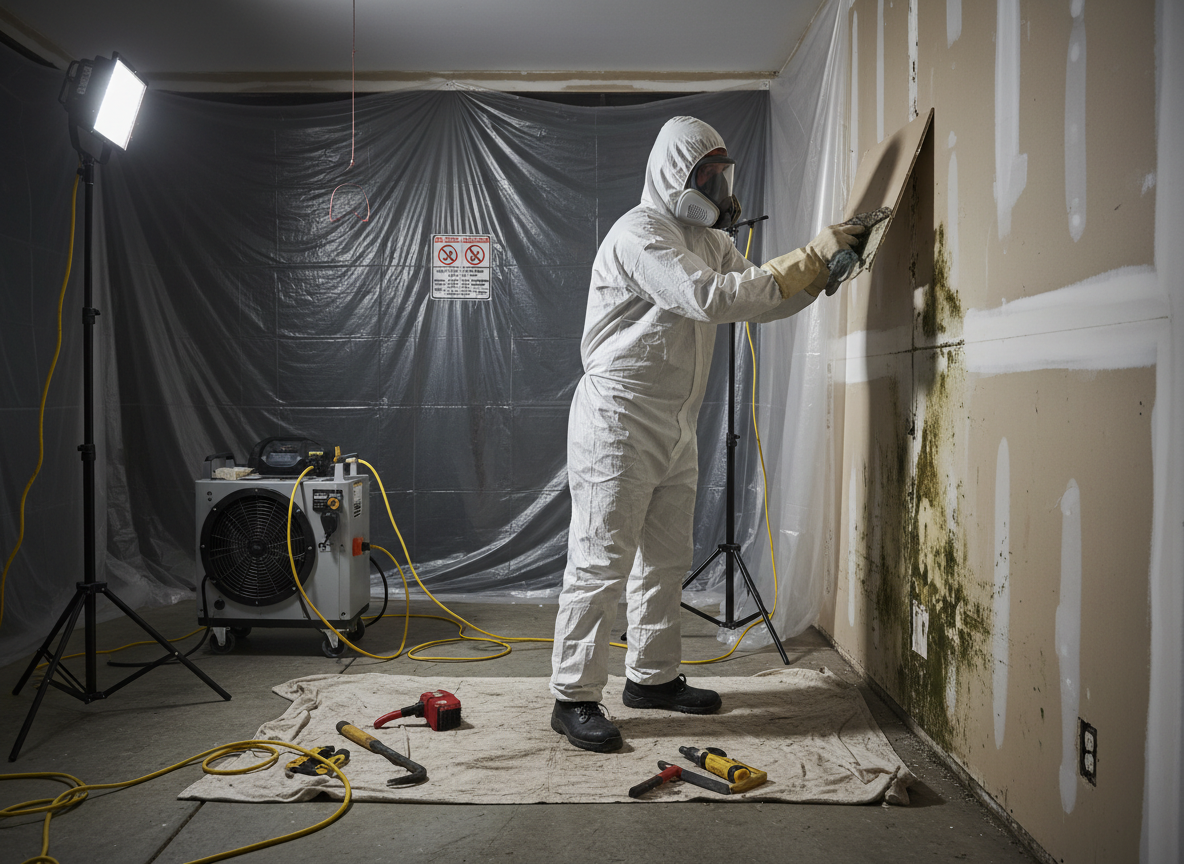
Containment in these single-story ranch homes requires negative air machines placed at exterior doors facing Limonite Avenue to avoid pulling spores into living spaces. Porous materials like textured drywall and popcorn ceilings common in Riverside County tracts must be removed in full sections rather than spot treated because the arid climate dries surface mold quickly while leaving roots inside the paper facing. Post-remediation verification includes moisture mapping of concrete slabs that retain water from monsoonal runoff in low-lying areas of Eastvale and Ontario.
Nearby cities such as Jurupa Valley share the same alluvial soil that shifts with seasonal heat, cracking slab edges and allowing groundwater vapor to enter crawl spaces. Technicians working from the 12483 Limonite Ave base respond within hours because delayed action lets colonies expand behind baseboards before homeowners notice musty odors in laundry rooms.
Technician insight
In Mira Loma, the thing that catches most people out with mold remediation near me is how our hot desert summers dry the visible surface of growth inside older stucco homes in Downtown Mira Loma while the roots stay active behind drywall because irrigation overspray and poor slab edges keep feeding moisture year-round.
Attic Mold After AC Failure Near Mira Loma Park
A single-story home near Mira Loma Park lost air conditioning during a July heat wave. Condensation formed on uninsulated ducts and dripped into insulation. We removed saturated sections, cleaned the ductwork, and dried the attic space over two days. Follow-up readings showed moisture levels returned to normal and no recurrence after the system was repaired.
How it works
- 1
Initial Assessment
Technician inspects affected rooms, checks HVAC returns, and maps moisture levels in walls and under flooring using infrared tools.
- 2
Containment Setup
Plastic barriers and negative air machines isolate the work zone to prevent spore migration into unaffected areas of the home.
- 3
Removal and Cleaning
Damaged materials are cut out, surfaces are HEPA vacuumed and treated with antimicrobial solutions suited for desert-dried substrates.
- 4
Drying and Verification
Dehumidifiers and air movers restore normal moisture content, followed by independent testing before barriers come down.
Pricing
Cost depends on square footage affected, depth of hidden growth, and whether HVAC components require cleaning; upfront quotes provided after inspection.