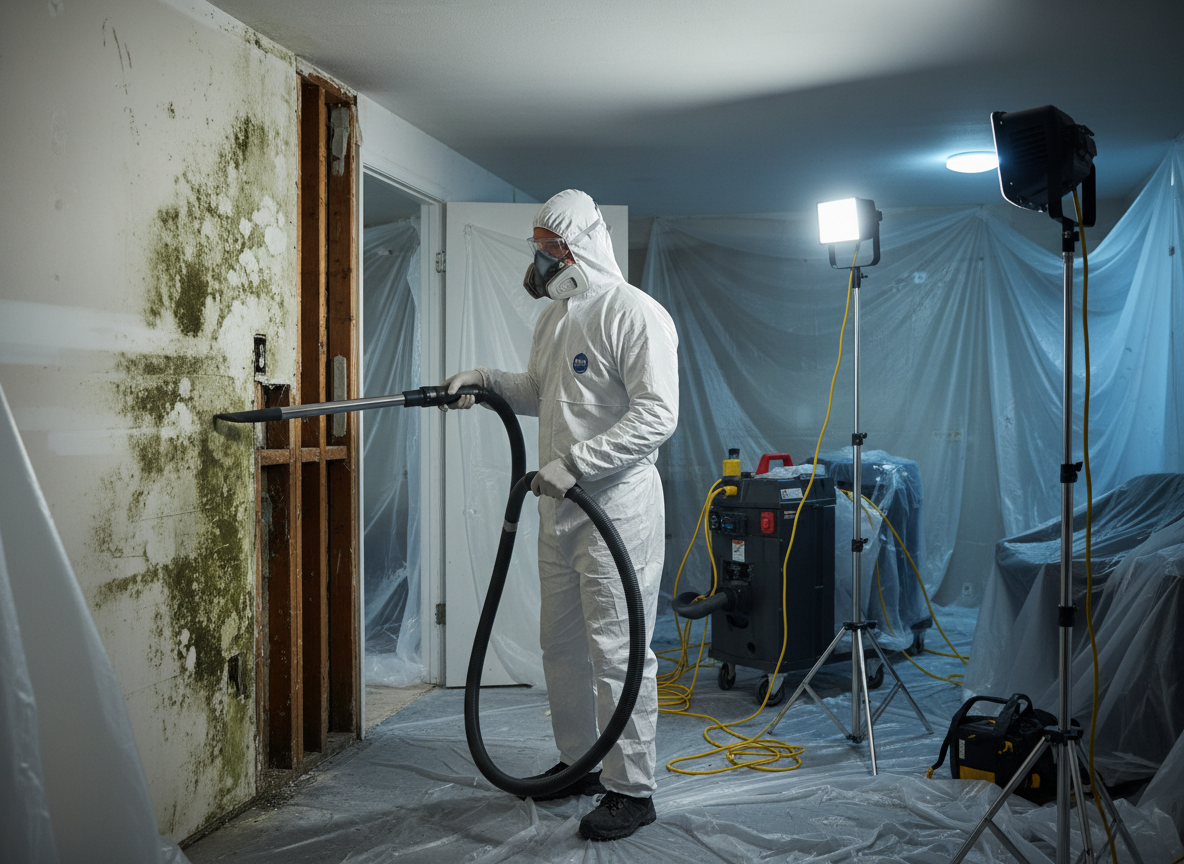
Mira Loma homes built before 1990 often have older HVAC systems and slab foundations that trap moisture after the rare but intense summer thunderstorms common in Riverside County. When water enters through roof penetrations or window seals, mold colonies can spread behind drywall within 48 hours because daytime temperatures above 100 degrees push humidity into cooler wall cavities. Our crews at 12483 Limonite Ave map moisture with thermal imaging before any demolition to avoid missing hidden growth in the single-story ranch houses that dominate Downtown Mira Loma.
Eastvale and Jurupa Valley new builds use tighter envelopes that reduce airflow, so air-conditioned interiors stay damp longer during the long hot season. We see repeated failures at bathroom exhaust fans that vent into attics instead of outside, feeding mold on roof sheathing. In Wine Country properties near Mira Loma Park, irrigation overspray from vineyards frequently saturates stucco and creates chronic wall moisture that standard bleach cleaning never reaches.
Ontario and surrounding areas share the same alluvial soils that hold water against foundations after winter rains, forcing remediation crews to pull baseboards and treat sill plates on nearly every job. We always run negative air machines through doorways facing Limonite Ave traffic to keep spores from migrating into occupied spaces during removal.
Riverside County code requires proper containment and disposal of contaminated materials; skipping these steps leaves homeowners liable when selling. Our 24/7 crews document every step with photos and moisture logs so the job meets inspection requirements without delay.
Technician insight
In Mira Loma the thing that catches most people out with mold remediation company is the slab-edge moisture that travels under the stucco because our hot summers drive irrigation water right against the foundation; once it wicks into the drywall from below, you have to open the wall at least two feet past the visible stain or the colony just regrows during the next heat wave.
Slab-edge mold after summer irrigation leak
Homeowner in Downtown Mira Loma noticed a musty smell in the laundry room after weeks of 105-degree days. We found the source was a cracked irrigation line soaking the slab edge and traveling under the stucco into the drywall. Removed the lower two feet of wall, treated the sill plate, and ran dehumidifiers for three days until readings stabilized. No recurrence reported after the next monsoon season.
How it works
- 1
Initial Inspection
Technician arrives within hours, uses moisture meters and borescopes to locate all affected areas in the home.
- 2
Containment Setup
Plastic barriers and negative air machines isolate the work zone to prevent spore spread to unaffected rooms.
- 3
Removal and Cleaning
Remove porous materials, HEPA vacuum surfaces, and apply EPA-registered antimicrobials to framing and ducts.
- 4
Drying and Verification
Industrial dehumidifiers run until readings drop below 15 percent, followed by third-party air sampling if requested.
- 5
Final Clearance
Provide written report with photos and moisture data for homeowner records and insurance.
Pricing
Pricing varies by square footage affected, whether HVAC ducts require cleaning, and how many rooms need containment; most Mira Loma jobs fall in the mid-range for Riverside County because of older single-story construction.