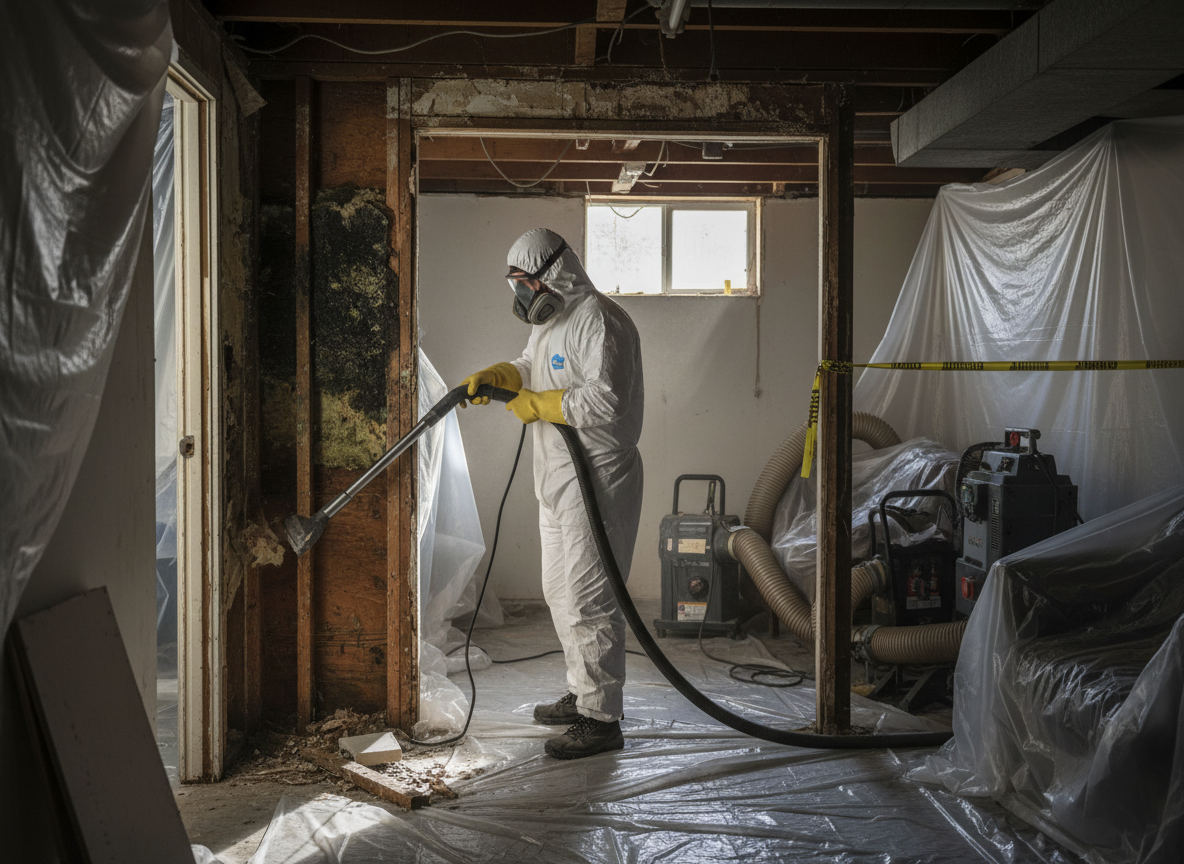
Mira Loma homes in Downtown Mira Loma and near Mira Loma Park often feature older wood-frame construction with single-pane windows that trap humidity when residents run air conditioning nonstop during 100-plus degree summers. Condensation builds on coils and in attic spaces, feeding mold on insulation and ceiling joists. We see this pattern repeatedly in Riverside County properties where original plumbing from the 1970s and 1980s starts to sweat or leak behind walls. Removing surface growth without addressing the moisture source leads to rapid regrowth once temperatures climb again.
Abatement work here frequently involves cutting out sections of drywall in laundry rooms and bathrooms where older cast-iron drains have corroded. In homes closer to Wine Country, we also encounter mold on stucco-clad exterior walls after monsoon-style rains push water under window flashing. Containment must account for the dry, dusty air that can spread spores through HVAC returns if negative pressure is not maintained. Homeowners sometimes attempt bleach cleaning on visible spots, but this leaves roots in porous materials like drywall and carpet padding common in Eastvale-adjacent neighborhoods.
Riverside County building codes require proper disposal of contaminated materials and documentation of moisture source correction before any reconstruction. We use air scrubbers and dehumidifiers sized for desert conditions because standard units cannot keep indoor humidity below 50 percent when outside temperatures exceed 105 degrees. Edge cases include crawl spaces under homes near Jurupa Valley where poor grading allows irrigation runoff to pool against foundations, creating persistent mold on floor joists that only appears after a hot spell forces residents to close up the house.
Technician insight
In Mira Loma, the thing that catches most people out with mold abatement is the way nonstop AC use during 110-degree summers keeps pushing condensation into attic insulation even after the visible wall mold is gone. Older homes near Downtown Mira Loma with original ductwork hidden behind drywall make it easy to miss the real source until the next heat wave forces the system back on.
Hidden Attic Mold After AC Failure
A Mira Loma homeowner near Mira Loma Park noticed musty smells after their AC unit ran constantly through July. Inspection showed condensation had soaked insulation above the master bedroom. We contained the attic, removed wet material, and dried the space while the unit was repaired. Follow-up readings confirmed humidity stayed under 45 percent once the system cycled normally again.
How it works
- 1
Initial Assessment
We inspect affected rooms, attics, and crawl spaces in Mira Loma homes, mapping moisture sources tied to AC condensation or aging plumbing.
- 2
Containment Setup
Plastic barriers and negative air machines isolate the work area so spores do not spread through the HVAC system during hot summer days.
- 3
Material Removal
Contaminated drywall, insulation, and carpet are cut out and bagged for proper disposal while protecting remaining surfaces.
- 4
Drying and Clearance
Industrial dehumidifiers and air movers run until moisture readings drop, followed by post-remediation air sampling before any rebuild.
Pricing
Cost depends on square footage affected, whether HVAC cleaning is needed, and access to crawl spaces or attics common in Mira Loma homes; we provide upfront quotes after inspection.